Basics
Lenses and mounts: the basics before you buy into a system
Why the lens mount matters more than the body, which mount each brand uses, focal length and aperture in plain English, and when lens stabilisation matters.
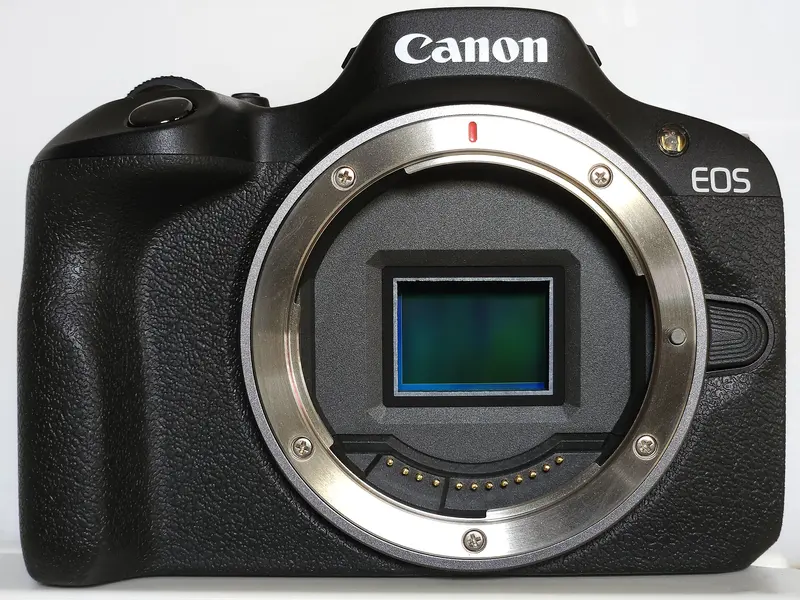
Camera bodies come and go; lenses last for years. When you buy an interchangeable-lens camera, you're really choosing a lens mount — the fitting that connects lens and body.
Which mount does each camera use?
| Mount | Used by (in our database) | Sensor sizes |
|---|---|---|
| Canon RF (RF-S lenses for APS-C) | Canon EOS R cameras | Full frame and APS-C |
| Canon EF / EF-S | Canon DSLRs such as the EOS 250D | Full frame and APS-C |
| Nikon Z | Nikon Z cameras | Full frame and APS-C (DX) |
| Nikon F | Nikon DSLRs | Full frame and APS-C (DX) |
| Sony E | Sony Alpha and ZV-E cameras | Full frame and APS-C |
| Fujifilm X | Fujifilm X series | APS-C |
| Fujifilm G | Fujifilm GFX100S II | Medium format |
| L-Mount | Panasonic LUMIX S cameras | Full frame |
| Micro Four Thirds | Panasonic LUMIX G and OM System cameras | Micro Four Thirds |
Micro Four Thirds is shared by two makers in our database — Panasonic and OM System — so their lenses work on each other's bodies.
Adapters
Adapters let you use older lenses on newer bodies. Canon's specifications list the Mount Adapter EF-EOS R for using EF and EF-S lenses on its mirrorless cameras, and Nikon's Z-mount specifications say F-mount NIKKOR lenses work with a mount adapter, with some restrictions. Check the maker's compatibility notes for autofocus and stabilisation before you rely on an adapted lens.
Focal length in plain English
- Wide (roughly 14–35 mm full-frame equivalent): landscapes, interiors, vlogging at arm's length.
- Standard (around 40–60 mm): close to natural perspective; good all-rounders.
- Telephoto (85 mm and up): portraits, sport and wildlife.
On a smaller sensor, multiply by the crop factor to compare — see sensor sizes explained.
Aperture
The f-number (f/1.8, f/2.8, f/4…) is the size of the lens opening. Lower numbers mean a wider opening: more light, faster shutter speeds and more background blur. Zooms often have a range, e.g. f/1.8–2.8 on the Canon PowerShot G7 X Mark III, meaning the widest aperture gets smaller as you zoom in.
Prime or zoom?
- Zoom lenses cover a range of focal lengths — the convenient choice for travel and a first lens.
- Prime lenses have one focal length. They're often smaller and brighter for the money.
The kit lens sold with many bodies is a sensible start; a bright prime (around 35–50 mm equivalent) is a sensible second lens to consider.
Stabilised lenses matter on some bodies
Some cameras have no in-body stabilisation — in our database that includes the Canon EOS R8, Canon EOS R50 and Nikon Z50II. On those, lenses with optical stabilisation (Canon IS, Nikon VR, Sony OSS) help with slow shutter speeds and handheld video. Filter for "In-body stabilisation" on the camera list if you'd rather have it built in.
Before you buy into a system
- Check the lenses you'll want next actually exist for that mount, in your budget.
- Think about weight: full-frame telephotos are big.
- If you already own lenses, see if an adapter covers them.
Last updated 3 October 2026. Some links on this page go to Amazon or other shops; we may earn a commission. As an Amazon Associate I earn from qualifying purchases.
More guides
- Basics DSLR vs mirrorless: which should you buy in 2026?
- Vlogging How to choose a vlogging camera
- Basics Sensor sizes explained: full frame, APS-C, Micro Four Thirds and more
- Buying advice The camera specs that actually matter (and the ones that don't)
- Checklist Buying your first proper camera: a checklist